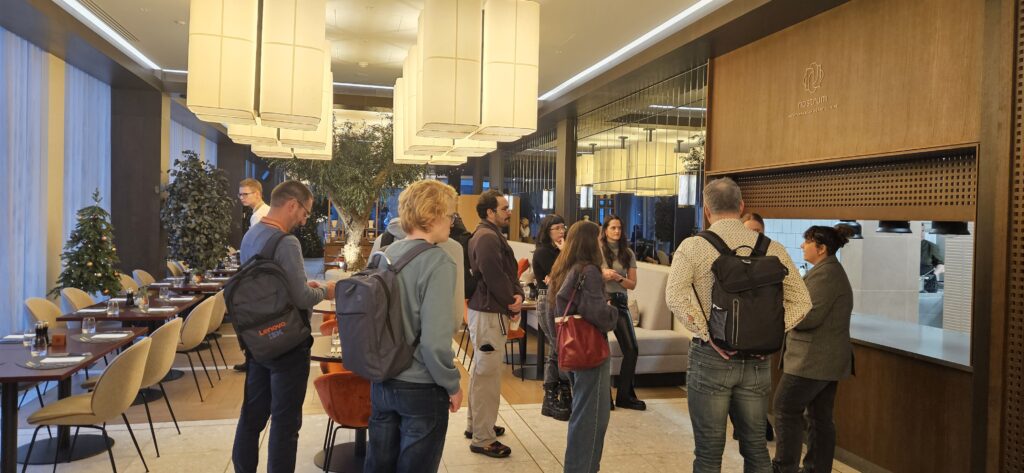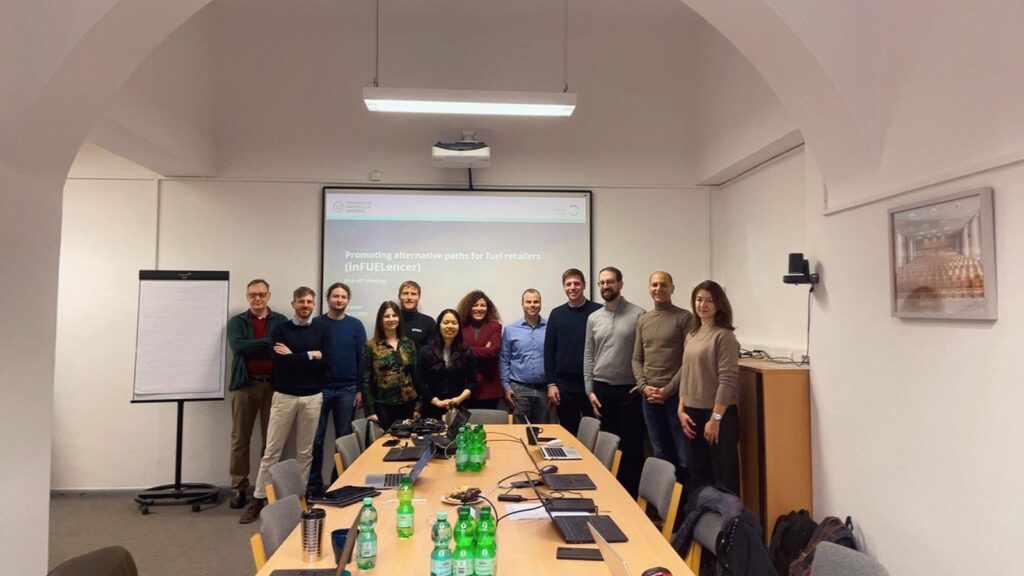
Projektstart von 2 neuen ERASMUS+ Projekt im Dezember 2025 – Ein gemeinsames Ziel (ENGLISH BELOW)

Beide Projekte, GAMESONBOARD sowie InFUELencer – folgen den europäischen Prioritäten: digitale Transformation, Nachhaltigkeit und Inklusion. Sie zeigen, wie innovative Ansätze die berufliche Bildung in Europa fit für die Zukunft machen: praxisnah, digital und nachhaltig.

Die TALENTBRÜCKE bringt dabei ihre langjährige Erfahrung ein, in der qualitativen Verbesserung, Systematisierung und Entwicklung innovativer Lösungen für die berufliche Orientierung in Deutschland und im Ausland. Bereits über 20 internationale Projekte mit mehr als 50 Partnerorganisationen in ganz Europa wurden erfolgreich umgesetzt.

GAMESONBOARD – ERASMUS+ Projekt: Onboarding neu gedacht

Das Erasmus+ Projekt GAMESONBOARD unter der Projektleitung von Interaktiv GmbH aus Kerpen modernisiert das Onboarding internationaler Auszubildender. Mit einer KI-gestützten, gamifizierten Plattform werden Onboarding-Prozesse strukturierter, inklusiver und interaktiver.

Durch den Einsatz von adaptiver KI, Gamification und interaktivem Storytelling entsteht eine Lernumgebung, die interkulturelle Kompetenzen stärkt, die berufliche Handlungsfähigkeit fördert und die Eingewöhnung am Arbeitsplatz erleichtert. Geplant sind Pilotphasen in VET-Zentren und Unternehmen in ganz Europa, deren Rückmeldungen direkt in die Weiterentwicklung einfließen.

Offene Lernmaterialien, praxisnahe Tools für Unternehmen und Bildungseinrichtungen sowie politische Handlungsempfehlungen sorgen dafür, dass die Plattform langfristig Wirkung in der beruflichen Bildung entfaltet.

InFUELencer – ERASMUS+ Projekt: Nachhaltigkeit im Tankstellen-Sektor

Das Erasmus+ Projekt InFUELencer unter der Projektleitung der Technischen Universität Dresden (Professur für Nachhaltigkeitsmanagement und Betriebliche Umweltökonomie) widmet sich der grünen Transformation des Kraftstoffeinzelhandels. Gemeinsam mit europäischen Partnern wird ein praxisnahes Curriculum für VET-Trainer:innen entwickelt, ergänzt durch digitale Lernmodule und eine E-Learning-Plattform. In Workshops, „Train-the-Trainer“-Formaten und nationalen Pilotschulungen erhalten Kraftstoffhändler:innen in Europa das Wissen und die Werkzeuge, um nachhaltige Geschäftsmodelle erfolgreich umzusetzen.

Internationale Projekte – Ansprechpartner

Steffen Leist

Steffen Leist

Projektleiter Internationale Projekte

Launch of two new ERASMUS+ projects in December 2025 – A common goal

The GAMESONBOARD and InFUELencer projects are in line with European priorities: digital transformation, sustainability and inclusion. They demonstrate how innovative approaches can make vocational training in Europe fit for the future: practical, digital and sustainable.

TALENTBRÜCKE contributes its many years of experience in the qualitative improvement, systematisation and development of innovative solutions for vocational orientation in Germany and abroad. More than 20 international projects with over 50 partner organisations across Europe have already been successfully implemented.

GAMESONBOARD – ERASMUS+ project: Onboarding reimagined

The Erasmus+ project GAMESONBOARD, led by Interaktiv GmbH from Kerpen, is modernising the onboarding of international trainees. An AI-supported, gamified platform makes onboarding processes more structured, inclusive and interactive.

The use of adaptive AI, gamification and interactive storytelling creates a learning environment that strengthens intercultural skills, promotes professional competence and facilitates acclimatisation in the workplace. Pilot phases are planned in VET centres and companies throughout Europe, with feedback from these phases being incorporated directly into further development.

Open learning materials, practical tools for companies and educational institutions, and policy recommendations ensure that the platform has a long-term impact on vocational education and training.

InFUELencer – ERASMUS+ Project: Sustainability in the petrol station sector

The Erasmus+ project InFUELencer, led by the Technical University of Dresden (Chair of Sustainability Management and Business Environmental Economics), is dedicated to the green transformation of fuel retail. Together with European partners, a practical curriculum for VET trainers is being developed, supplemented by digital learning modules and an e-learning platform. In workshops, train-the-trainer formats and national pilot training courses, fuel retailers in Europe are given the knowledge and tools they need to successfully implement sustainable business models.

International projects – Contact person

Steffen Leist

Steffen Leist

Projektleiter Internationale Projekte

Ein gelungener Start: Rückblick auf die ersten Monate des Einstiegsinstruments (ENGLISH BELOW)

Seit dem 1. September begleiten wir im Rahmen von Kein Abschluss ohne Anschluss (KAoA) Schüler:innen mit dem Einstiegsinstrument auf ihrem Weg der beruflichen Orientierung.
Bis zum 18. Dezember werden es rund 5.200 Schülerinnen und Schüler gewesen sein, die das neue TALENTBRÜCKE-Konzept kennengelernt, erlebt und aktiv mitgestaltet haben. Zeit für einen kurzen Rückblick – und für eine durchweg positive Bilanz.

Mit der neuen konzeptionellen Ausrichtung des Einstiegsinstruments haben wir bewusst auf eine stärkere Handlungsorientierung, klare Strukturen und eine intensive Auseinandersetzung mit individuellen Stärken gesetzt. Die Rückmeldungen aus den bisherigen Durchführungen zeigen deutlich: Dieser Weg hat sich gelohnt. Die Schüler:innen konnten sich aktiv einbringen, ihre Fähigkeiten erproben und sich selbst in neuen Rollen erleben. Viele von ihnen haben das Einstiegsinstrument nicht nur als informativ, sondern auch als motivierend, abwechslungsreich und praxisnah wahrgenommen – und vor allem als etwas, das Spaß macht.

4 Personen arbeiten gemeinsam an einem Tisch an einer Gruppenaufgabe.
Drei Personen geben einer vierten Person positives Feedback.

Besonders erfreulich ist das positive Feedback aus unterschiedlichen Perspektiven. Verschiedene Akteure des KAoA-Prozesses – darunter Vertreter:innen der Kommunalen Koordination sowie Schulen und Kooperationspartner – haben bei unseren Durchführungen hospitiert und die praktische Umsetzung des Konzepts ausdrücklich gelobt. Hervorgehoben wurden dabei insbesondere die klare Einführung in das Thema Berufsorientierung, die wertschätzende Atmosphäre sowie die Möglichkeit für die Schüler:innen, sich aktiv und reflektiert mit ihren Stärken auseinanderzusetzen.

Auch unsere Lizenznehmer berichten übereinstimmend von sehr guten Erfahrungen mit dem neuen Verfahren. Sie nehmen eine hohe Beteiligung der Schüler:innen wahr und bestätigen, dass sich das Konzept gut in bestehende organisatorische Abläufe integrieren lässt. Diese Rückmeldungen bestärken uns darin, dass das Einstiegsinstrument weit mehr ist als ein formaler Startpunkt in KAoA – vielmehr setzt es einen wirksamen Impuls für den weiteren Berufsorientierungsprozess.

Die ersten Monate haben gezeigt: Ein gelungener Einstieg schafft Orientierung, stärkt Selbstvertrauen und legt eine tragfähige Grundlage für alle weiteren Schritte in KAoA. Wir freuen uns über das Vertrauen, das uns entgegengebracht wird, und blicken motiviert auf die kommenden Durchführungen – mit dem Ziel, auch weiterhin möglichst vielen Schüler:innen einen positiven und nachhaltigen Start in ihre berufliche Zukunft zu ermöglichen.

Einstiegsinstrument – Ihr Ansprechpartner

Thomas Beck

Thomas Beck

Geschäftsführer

A successful start: Review of the first few months of the entry-level tool

Since 1 September, we have been supporting school students with their career orientation using the entry-level tool as part of the Kein Abschluss ohne Anschluss (KAoA) initiative.
By 18 December, around 5,200 school students will have been given the opportunity to get to know, experience and actively shape the new TALENTBRÜCKE concept. It is time for a brief review – and for a thoroughly positive assessment.

With the new conceptual orientation of the entry-level tool, we have deliberately focused on a stronger practical orientation, clear structures and an intensive examination of individual strengths. The feedback from the implementations to date clearly shows that this approach has paid off. The students were able to actively participate, test their skills and experience themselves in new roles. Many of them found the introductory tool not only informative, but also motivating, varied and practical – and above all, enjoyable.

Four people are working together on a group task at a table.
Three people give positive feedback to a fourth person.

The positive feedback from different perspectives is especially encouraging. Various stakeholders in the KAoA process – including representatives of municipal coordination bodies, schools and cooperation partners – visited our sessions and expressly praised the practical implementation of the concept. Particular emphasis was placed on the clear introduction to the topic of career orientation, the appreciative atmosphere and the opportunity for students to actively and reflectively engage with their strengths.

Our licensees also unanimously report very good experiences with the new procedure. They have noticed a high level of participation among students and confirm that the concept can be easily integrated into existing organisational processes. This feedback reinforces our belief that the entry-level tool is much more than a formal starting point in KAoA – rather, it provides an effective impetus for the further career orientation process.

The first few months have shown that a successful start provides orientation, boosts self-confidence and lays a solid foundation for all further steps in KAoA. We are delighted with the trust placed in us and are looking forward to the upcoming implementations with motivation – with the aim of continuing to enable as many students as possible to make a positive and sustainable start to their professional future.

Einstiegsinstrument – Ihr Ansprechpartner

Thomas Beck

Thomas Beck

Geschäftsführer

Wie stellen wir ein Konsortium für unsere internationalen Projekte zusammen? (ENGLISH BELOW)

Ein erfolgreiches internationales Projekt steht und fällt mit einem gut zusammengestellten Konsortium. Doch wie finden wir die richtigen Partner? Welche Plattformen nutzen wir? Und worauf legen wir besonderen Wert? Hier ein Einblick in unsere Strategie.

Austausch auf Veranstaltungen und Konferenzen zu ERASMUS+ Partnerschaften

Wir setzen auf bewährte Plattformen wie EPALE (Electronic Platform for Adult Learning in Europe) und TCAs (Transnational Cooperation Activities organisiert bei den Nationalen Agenturen für ERASMUS+) um potenzielle Partner kennenzulernen und erste Kontakte zu knüpfen. Diese Plattformen bieten nicht nur wertvolle Informationen zu relevanten Themen, sondern auch die Möglichkeit, sich mit interessierten Organisationen auszutauschen und neue Partnerschaften zu entwickeln.

Verschiedene Moderationskarten kleben an einem Fenster. Im Hintergrund ist der Kölner Dom zu sehen.
Mapping des Projektnetzwerks während dem Kick Off Workshop von MAPWISE in Köln

Erprobte ERAMUS+ Partnerschaften weiterführen

Wir arbeiten gerne mit Partnern zusammen, mit denen wir bereits gute Erfahrungen gemacht haben. Wenn die Expertise und die Zusammenarbeit in früheren Projekten überzeugt haben, ist es naheliegend, diese bewährten Partnerschaften weiter zu pflegen und auszubauen. Dies gewährleistet nicht nur eine reibungslose Kommunikation, sondern auch ein gemeinsames Verständnis für die Projektziele.

Steffen Leist steht vor einer Banner des EU TCAs evidence based approach.
Teilnahme am jährlichen TCA zu Evidence-based Approach in E+ in Warschau.

Netzwerke rund um ERASMUS+ Partnerschaften gezielt nutzen

Bevor wir eine Organisation in unser Konsortium aufnehmen, setzen wir auf einen intensiven bilateralen Austausch. Erst wenn wir das Gefühl haben, dass wir mit dem potenziellen Partner gemeinsam ein starkes Projekt auf die Beine stellen können, nehmen wir ihn in unser Konsortium auf. Dabei sind nicht nur fachliche Expertise und Erfahrung entscheidend, sondern auch die Bereitschaft zur offenen Zusammenarbeit und das beide Parteien sehen, dass sie mit einem innovativen Projekt ihre Profile schärfen und die Zielgruppen nachhaltige voranbringen können.

Ziel: Chancen und Herausforderungen in ERASMUS+ Partnerschaften gemeinsam meistern

Die Zusammenstellung eines Konsortiums ist nicht nur eine strategische Entscheidung, sondern auch ein wichtiger Schritt für den langfristigen Erfolg eines Projekts und der interorganisationalen Zusammenarbeit. Durch einen strukturierten Auswahlprozess und den gezielten Aufbau von Netzwerken stellen wir sicher, dass unsere Projekte auf stabilen ERASMUS+ Partnerschaften basieren und einen nachhaltigen Impact haben. Wir setzen immer darauf, dass diese Partnerschaften schon vor Projektbeginn gestärkt werden und sich im Projekt entfalten können, um darüber hinaus nachhaltig zu bestehen. Mit dieser Vorgehensweise haben wir bereits viele erfolgreiche Konsortien geformt und freuen uns darauf, auch in Zukunft starke Partnerschaften zu entwickeln! Mehr zu unseren aktuellen und früheren internationalen Projekten auf https://projects.talentbruecke.de/.

Internationale Projekte – Ansprechpartner

Steffen Leist

Steffen Leist

Projektleiter Internationale Projekte

How do we put together a consortium for our international projects?

A well-chosen consortium is the key to a successful international project. But how do we find the right partners? Which platforms do we use? And what is particularly important to us? Here is an insight into our strategy.

Exchange at events and conferences on ERASMUS+ partnerships

We rely on proven platforms such as EPALE (Electronic Platform for Adult Learning in Europe) and TCAs (Transnational Cooperation Activities organised by National Agencies) to get to know potential partners and establish initial contacts. These platforms not only provide valuable information on relevant topics, but also the opportunity to exchange ideas with interested organisations and develop new partnerships.

Various moderation cards are stuck to a window. Cologne Cathedral can be seen in the background.
Mapping of the project network during the MAPWISE kick-off workshop in Cologne

Continue proven ERAMUS+ partnerships

We enjoy working with partners with whom we have already had positive experiences. If the expertise and cooperation in previous projects have been convincing, it makes sense to continue to cultivate and expand these proven partnerships. This not only ensures smooth communication, but also a common understanding of the project goals.

Steffen Leist stands in front of a banner advertising the EU TCA's evidence-based approach.
Participation in the annual TCA on Evidence-based Approach in E+ in Warsaw.

Targeted use of networks around ERASMUS+ partnerships

Another important element in our choice of partners is the Conference on Project Development (CPD). This network offers us the opportunity to meet potential partners in person, identify common interests and set the course for successful cooperation at an early stage. At the CPD, we exchange ideas with long-standing partners about funding, quality management, project ideas and future planning in the project business.

Bilateral exchange as a basis for decision-making for ERASMUS+ partnerships

Before we accept an organisation into our consortium, we rely on intensive bilateral exchange. We only include a potential partner in our consortium if we feel that we can work together to create a strong project. In this process, not only professional expertise and experience are crucial, but also the willingness to work together openly and for both parties to see that they can raise their profiles and advance their target groups in the long term with an innovative project.

Objective: Mastering opportunities and challenges in ERASMUS+ partnerships together

Putting together a consortium is not only a strategic decision, but also an important step for the long-term success of a project and inter-organisational cooperation. Through a structured selection process and the targeted development of networks, we ensure that our projects are based on stable ERASMUS+ partnerships and have a sustainable impact. We always focus on strengthening these partnerships before the project begins, allowing them to flourish during the project and continue to exist sustainably beyond it. We have already formed many successful consortia using this approach and look forward to developing strong partnerships in the future as well! Find out more about our current and previous international projects at https://projects.talentbruecke.de/.

International projects – Contact person

Steffen Leist

Steffen Leist

Projektleiter Internationale Projekte

Fachkräftebarometer 2025: Engpass bleibt – Lösungen brauchen internationalen Rückenwind (ENGLISH BELOW)

Der Blick ins Fachkräftebarometer zeigt: Trotz leicht sinkender Zahl offener Stellen bleibt der Personalmangel in Kitas real. 2024 arbeiten rund 935.000 Menschen in der Kindertagesbetreuung, das pädagogische und leitende Kita-Personal wuchs seit 2022 um ca. 54.000. Gleichzeitig konstatiert das Fachkräftebarometer weiterhin einen bundesweiten Engpass – die offenen Stellen für Erzieher:innen gingen zwar von etwa 13.000 auf 12.000 zurück, den Stellen standen aber nur rund 10.900 arbeitslos gemeldete Erzieher:innen gegenüber.

Warum der Mangel laut Fachkräftebarometer bleibt

Mehr Plätze, längere Öffnungszeiten, Ganztag – der Bedarf wächst vielerorts schneller als die inländische Ausbildung nachliefern kann. Zugleich ist das Berufsfeld stark reguliert: Wer ohne einschlägigen Abschluss einsteigen will, stößt auf Grenzen. Der Anteil ausländischer Beschäftigter liegt in der Frühen Bildung bislang nur bei rund 5 % – deutlich niedriger als in Pflegeberufen. Gründe sind u. a. komplexe Anerkennungsverfahren und notwendige Nachqualifizierungen.

Ausländische Fachkräfte als Teil der Lösung

Die Daten zeigen aber auch: Hier schlummert Potenzial. 2023 wurden knapp 82.000 Anerkennungsverfahren ausländischer Berufsqualifikationen in Deutschland bearbeitet – mehr als doppelt so viele wie 2016. Für den Referenzberuf Erzieher:in registrierte die Statistik 2.778 Verfahren (Platz 6 aller Referenzberufe; +24 % ggü. 2022; +65 % in fünf Jahren).

Entscheidend ist der Outcome: 25 % der entschiedenen Erzieher:innen-Verfahren endeten 2023 mit voller Gleichwertigkeit, in 49 % wurden Ausgleichsmaßnahmen festgelegt. Viele Qualifikationen stammen aus EU-Ländern (u. a. Spanien, Polen), zudem stiegen Verfahren aus Ukraine und Türkei merklich an.

Was jetzt hilft – laut Fachkräftebarometer

Damit aus Anerkennung echte Entlastung wird, braucht es verschiedene Hebel. Zwei Hebel seien hier genannt:

Verfahren beschleunigen & begleiten – transparente Beratung, Sprachförderung, Anerkennungsbegleitung.

Team-Design öffnen: Quer- und Direkteinstiege mit klaren Rollenprofilen (z. B. Gruppenübergreifende Fachkräfte) erleichtern das Ankommen im System.

Fazit: Der Engpass im Kita-Bereich bleibt – aber mit einem konsequenten Ausbau von Anerkennung, Qualifizierung und guter Begleitung können ausländische Fachkräfte schnell zu einem tragenden Teil der Lösung werden. Das Fachkräftebarometer liefert dafür die Datenbasis und den Handlungsauftrag.

Comicartige Illustration: Drei pädagogische Fachkräfte unterschiedlicher Herkunft setzen gemeinsam große Puzzleteile zusammen; im Hintergrund ein heller Kita-Raum. Beitrag zum Fachkräftebarometer 2025. Erstellt mithilfe von KI.

Ausländische Fachkräfte – Ihre Ansprechpartner

Sie haben Fragen zur Anerkennung ausländischer Fachkräfte? Sprechen Sie uns an!

Quellen für diesen Artikel

Fachkräftebarometer Frühe Bildung 2025 und Anerkennung ausländischer Berufsabschlüsse abrufbar unter https://www.fachkraeftebarometer.de/.

Dieser Artikel wurde unter Zuhilfenahme von KI geschrieben und vom Autor angepasst. Das Bild wurde mit KI erzeugt.

Skilled Worker Barometer 2025 (Fachkräftebarometer): Shortage persists – solutions need international support

A look at the Skilled Worker Barometer (Fachkräftebarometer) shows that despite a slight decline in the number of vacancies, the shortage of staff in daycare centres remains a reality. In 2024, around 935,000 people will be working in childcare, with the number of educational and managerial staff in daycare centres growing by approximately 54,000 since 2022.

At the same time, the skilled labour barometer continues to report a nationwide shortage – although the number of vacancies for educators fell from around 13,000 to 12,000, there were only around 10,900 educators registered as unemployed.

Why the shortage remains, according to the Skilled Worker Barometer

More places, longer opening hours, all-day care – in many places, demand is growing faster than domestic training can keep up. At the same time, the profession is highly regulated: anyone who wants to enter the field without a relevant qualification will encounter barriers. The proportion of foreign employees in early childhood education is currently only around 5% – significantly lower than in nursing professions.

Reasons for this include complex recognition procedures and the need for additional qualifications.

Foreign skilled workers as part of the solution

However, the data also shows that there is untapped potential here. In 2023, almost 82,000 recognition procedures for foreign professional qualifications were processed in Germany – more than twice as many as in 2016. For the reference occupation of educator, the statistics recorded 2,778 procedures (6th place among all reference occupations; +24% compared to 2022; +65% in five years).

The outcome is crucial: 25% of the procedures decided for educators ended in full equivalence in 2023, while 49% resulted in compensatory measures being specified. Many qualifications originate from EU countries (including Spain and Poland), and there was also a noticeable increase in procedures from Ukraine and Turkey.

What helps now – according to the skilled labour barometer

Various levers are needed to ensure that recognition translates into real relief. Two levers are mentioned here:

Accelerate and support procedures – transparent advice, language support, recognition support.

Open up team design: cross-functional and direct entry with clear role profiles (e.g. cross-group specialists) make it easier to settle into the system.

Conclusion: The bottleneck in the childcare sector remains – but with consistent expansion of recognition, qualification and good support, foreign skilled workers can quickly become a key part of the solution. The Skilled Worker Barometer provides the data basis and the mandate for action.

Comic-style illustration: Three educational professionals from different backgrounds are working together to assemble large puzzle pieces; in the background is a bright nursery room. Contribution to the 2025 Skills Barometer. Created with the help of AI.

Foreign skilled workers – your contact persons

Do you have questions about the recognition of foreign skilled workers? Please contact us!

Sources for this article

This article was written with the help of AI and adapted by the author. The image was generated using AI.

„Fachkräftebarometer Frühe Bildung 2025“ and „Anerkennung ausländischer Berufsabschlüsse“ available at https://www.fachkraeftebarometer.de/.

Drei unterschiedliche Erasmus+ Projekte, ein gemeinsames Ziel (ENGLISH BELOW)

MAPWISE – ERASMUS+ Projekt: Design, das verbindet

In unserem ERASMUS+ Projekt MAPWISE sind wir beim Screendesign einen großen Schritt vorangekommen. Dank der hervorragenden Arbeit unseres Partners CodeFlügel GmbH & Co. KG können wir uns bereits vorstellen, wie die App in der Praxis genutzt wird. Das moderne Front-End-Design schafft eine intuitive Grundlage, um Schulen und Bildungseinrichtungen in Europa künftig optimal bei der digitalen Orientierung zu unterstützen.

Ein erster Blick ins Screendesign von MAPWISE

GAMESONBOARD – ERASMUS+ Projekt: Onboarding neu gedacht

Das ERASMUS+ Projekt GAMESONBOARD unter der Projektleitung von Interaktiv GmbH  modernisiert das Onboarding internationaler Auszubildender. Mit KI, Gamification und interaktivem Storytelling entsteht eine Plattform, die interkulturelle Kompetenzen stärkt und die Eingewöhnung am Arbeitsplatz erleichtert. Geplant sind Pilotphasen in europäischen VET-Zentren und Unternehmen. Offene Lernmaterialien, praxisnahe Tools und politische Handlungsempfehlungen sichern die langfristige Wirkung in der beruflichen Bildung. Projektstart ist am 01. November 2025.

InFUELencer – ERASMUS+ Projekt: Nachhaltigkeit im Tankstellen-Sektor

Das ERASMUS+ Projekt InFUELencer unter der Projektleitung der Technischen Universität Dresden (Professur für Nachhaltikeitsmanagement und Betriebliche Umweltökonomie) rückt die grüne Transformation des Kraftstoffeinzelhandels in den Mittelpunkt. Entwickelt werden ein praxisnahes Curriculum für VET-Trainer:innen, digitale Lernmodule sowie eine E-Learning-Plattform. Mit Workshops, „Train-the-Trainer“-Sessions und nationalen Pilotschulungen erhalten Kraftstoffhändler:innen in Europa das Wissen und die Werkzeuge, um nachhaltige Geschäftsmodelle erfolgreich umzusetzen. Projektstart ist am 01. November 2025.

Ein gemeinsames Ziel

Alle drei ERASMUS+ Projekte folgen den europäischen Prioritäten: digitale Transformation, Nachhaltigkeit und Inklusion. Sie zeigen eindrucksvoll, wie Innovation die berufliche Bildung in Europa fit für die Zukunft macht – praxisnah, digital und nachhaltig. Die TALENTBRÜCKE bringt dabei ihre langjährige Erfahrung ein: Bereits über 20 internationale Projekte mit mehr als 50 Partnerorganisationen in ganz Europa wurden erfolgreich umgesetzt.

Über 50 internationale Partnerorganisationen im Netzwerk der TALENTBRÜCKE

Bleiben Sie auf dem Laufenden und folge unseren Projekten!

Erasmus+ Projekte – Ihre Ansprechperson

Steffen Leist

Steffen Leist

Projektleiter Internationale Projekte

Three different Erasmus+ projects, one common goal

MAPWISE – Erasmus+ Project: Design that Connects
In our Erasmus+ project MAPWISE, we have taken a major step forward in screen design. Thanks to the excellent work of our partner CodeFlügel GmbH & Co. KG, we can already envision how the app will be used in practice. The modern front-end design creates an intuitive foundation to support schools and educational institutions across Europe in digital orientation.

A first look at the MAPWISE screendesign

GAMESONBOARD – Erasmus+ Project: Rethinking Onboarding
The Erasmus+ project GAMESONBOARD lead by Interaktiv GmbH is modernizing the onboarding of international trainees. By combining AI, gamification, and interactive storytelling, it builds a platform that strengthens intercultural competences and facilitates workplace integration. Pilot phases in European VET centers and companies are planned, supported by open-access training materials, practical tools, and policy recommendations to ensure long-term impact in vocational education and training. Project start is on 01 November 2025.

InFUELencer – Erasmus+ Project: Sustainability in the Fuel Retail Sector
The Erasmus+ project InFUELencer lead by Technische Universität Dresden (Professur für Nachhaltikeitsmanagement und Betriebliche Umweltökonomie focuses on the green transition of the fuel retail sector. A practical curriculum for VET trainers, digital learning modules, and an e-learning platform are being developed. Through workshops, “train-the-trainer” sessions, and national pilot trainings, European fuel retailers will gain the knowledge and tools needed to implement sustainable business models successfully. Project start is on 01 November 2025.

One Common Goal
All three Erasmus+ projects follow the European priorities: digital transformation, sustainability, and inclusion. They demonstrate how innovation makes vocational education in Europe future-ready – practical, digital, and sustainable. TALENTBRÜCKE brings long-standing experience to the table: Over 20 international projects with more than 50 partner organisations across Europe have already been successfully implemented.

More than 50 international partner organisations in the TALENTBRÜCKE network

Stay up to date and follow our projects!

Erasmus+ Projekte – Your contact person

Steffen Leist

Steffen Leist

Projektleiter Internationale Projekte

Einstiegsinstrument (ENGLISH below)

Sommermonate als Weichenstellung: Die TALENTBRÜCKE rüstet sich für das Einstiegsinstrument

Traditionell läuft in den Sommerferien die TALENTBRÜCKE auf Hochtouren, denn das neue Schuljahr rückt immer näher – und somit auch die neuen Projekte zur Berufsorientierung der achten Klassen. Mit 95 Schulen, die die TALENTBRÜCKE allein im ersten Schulhalbjahr durch das neue Einstiegsinstrument zur beruflichen Orientierung begleitet, gab es auch in diesem Hochsommer einiges zu tun.

Das im Winter entwickelte und in ersten Testdurchläufen erprobte Konzept wurde in die Praxis überführt. In den Sommermonaten entstanden die finalen Materialien, die künftig den Kern des Einstiegsinstruments bilden – von Beobachtungsbögen über Reflexionshilfen bis hin zu den Materialien für die praxisnahen Aufgaben. Mit der sorgfältigen Herstellung und Abstimmung dieser Unterlagen schaffte das Team die Grundlage für eine reibungslose Umsetzung des Konzeptes.

Ein zentrales Element des Einstiegsinstruments ist das pädagogische Begleitpersonal. Für die Schülerinnen und Schüler sind diese Fachkräfte nicht nur Beobachter:innen, sondern auch wichtige Unterstützer:innen, die den Reflexionsprozess anregen und Orientierung geben. Entsprechend legt die TALENTBRÜCKE großen Wert darauf, geeignete Personen auszuwählen. Ein sorgfältiger Auswahlprozess, intensive Schulungen und eine enge Begleitung sorgen dafür, dass die neuen Kolleg:innen optimal auf ihre Aufgabe vorbereitet sind – damit die Jugendlichen bestmöglich profitieren können. Diesen Anspruch hat die TALENTBRÜCKE auch bei ihren Lizenznehmern, bei den die Schulungen in den Sommermonaten ebenfalls umfangreich durchgeführt wurden

Neben der Materialproduktion und der Personalauswahl nimmt auch die Abstimmung mit den Schulen einen großen Raum ein. Damit die Durchführungstage reibungslos verlaufen, koordiniert die TALENTBRÜCKE frühzeitig Termine, stimmt Abläufe ab und sorgt dafür, dass geeignete Räume bereitstehen. Dieser enge Austausch mit den Schulen ist entscheidend, um allen Beteiligten einen gut organisierten Rahmen zu bieten und den Schülerinnen und Schülern optimale Bedingungen zu ermöglichen. All diese Vorbereitungsmaßnahmen tragen nun Früchte: Mit dem neuen Schuljahr sind auch die ersten Durchführungen des Einstiegsinstruments zur beruflichen Orientierung erfolgreich gestartet. Die TALENTBRÜCKE und ihre pädagogischen Begleitpersonen freuen sich auf viele weitere spannende Einblicke, die Sie im Laufe der nächsten zehn Monate sammeln dürfen.

Einstiegsinstrument – Ihre Ansprechperson

Thomas Beck

Thomas Beck

Geschäftsführer

Summer months set the course: TALENTBRÜCKE prepares for the introductory instrument (Einstiegsinstrument)

Traditionally, TALENTBRÜCKE runs at full speed during the summer holidays, as the new school year is fast approaching – and with it, new career orientation projects for eighth-grade students. With 95 schools using the new introductory tool for career orientation in the first half of the school year alone, there was plenty to do this midsummer.

The concept, which was developed in winter and tested in initial trials, was put into practice. During the summer months, the final materials were created that will form the core of the entry-level tool in the future – from observation sheets and reflection aids to materials for practical tasks. By carefully producing and coordinating these documents, the team laid the foundation for the smooth implementation of the concept.

A central element of the entry tool is the educational support staff. For the pupils, these specialists are not only observers, but also important supporters who stimulate the reflection process and provide guidance. Accordingly, TALENTBRÜCKE attaches great importance to selecting suitable individuals. A careful selection process, intensive training and close support ensure that new colleagues are optimally prepared for their tasks – so that young people can benefit as much as possible. TALENTBRÜCKE also has this requirement for its licensees, who also underwent extensive training during the summer months.

In addition to producing materials and selecting personnel, coordination with schools also plays an important role. To ensure that the programme runs smoothly, TALENTBRÜCKE coordinates schedules in advance, agrees on procedures and ensures that suitable rooms are available. This close exchange with schools is crucial in order to provide a well-organised framework for all participants and to create optimal conditions for the pupils.

All these preparatory measures are now bearing fruit: with the start of the new school year, the first implementations of the entry-level career orientation tool have also been successfully launched. TALENTBRÜCKE and its educational support staff are looking forward to many more exciting insights that you will be able to gather over the next ten months.

Integration internationaler Fachkräfte: Die entscheidende Rolle der Führung (ENGLISH BELOW)

Die Integration internationaler Fachkräfte ist heute mehr als nur eine HR-Aufgabe – sie ist ein strategischer Erfolgsfaktor für Unternehmen. Gerade in Zeiten von Fachkräftemangel entscheiden nicht nur gute Verträge oder Onboarding-Prozesse darüber, ob neue Mitarbeitende bleiben. Vor allem die Führungskräfte prägen, wie reibungslos Eingliederung gelingt und ob sich internationale Talente langfristig binden.

Vorbildfunktion und Haltung

Führungskräfte sind zentrale Orientierungspunkte. Ihr Verhalten bestimmt, wie Vielfalt im Arbeitsalltag gelebt wird. Wer Offenheit, Respekt und Wertschätzung sichtbar vorlebt, sendet ein klares Signal an das gesamte Team. Diese Vorbildfunktion schafft ein Klima, in dem die Einbindung von neuen Mitarbeitenden nicht als Zusatzaufgabe, sondern als Teil der Unternehmenskultur verstanden wird.

Klare Erwartungen und Strukturen für Integration wichtig

Internationale Fachkräfte brauchen Transparenz. Unklare Aufgaben, Rollen oder Ziele führen schnell zu Unsicherheiten. Führungskräfte, die klare Erwartungen kommunizieren und Feedback geben, erleichtern den Einstieg erheblich. Strukturen und klare Kommunikation bilden die Basis für eine erfolgreiche Integration.

Vertrauen und Begleitung

Integration ist kein einmaliger Schritt, sondern ein kontinuierlicher Prozess. Regelmäßige Gespräche, offenes Feedback und die Bereitschaft zuzuhören sind entscheidend. Führungskräfte, die aktiv Vertrauen aufbauen, geben internationalen Mitarbeitenden die Sicherheit, sich entwickeln und entfalten zu können.

Das Team aktiv einbinden

Auch das bestehende Team spielt eine Schlüsselrolle. Mentoring-Programme, Tandem-Modelle oder kleine Gesten der Wertschätzung fördern das Zusammenwachsen. Hier haben Führungskräfte die Aufgabe, das Team bewusst mitzunehmen und eine Willkommenskultur zu gestalten, die über formale Prozesse hinausgeht.

Führung als Schlüssel zur Integration

Die Erfahrung zeigt: Dort, wo Führungskräfte Verantwortung übernehmen, gelingt Integration deutlich besser. Internationale Fachkräfte fühlen sich willkommen, können ihr Potenzial entfalten und bleiben langfristig im Unternehmen. Führung ist deshalb weit mehr als Organisation – sie ist Beziehungsgestaltung. Genau hier entscheidet sich, ob Integration wirklich gelingt.

Integration - Grafik mit 5 Personen. 4 sitzen an einem Tisch und eine Person mit freundlicher Haltung und Gestik begrüßt diese Personen. Die Gruppe ist sehr divers zusammengesetzt.
Führungskräfte sind entscheidend!

Integration – Mehr erfahren!

Möchten Sie mehr darüber erfahren, wie erfolgreiche Integration internationaler Fachkräfte in Ihrem Unternehmen gelingen kann?
Bei TALENTBRÜCKE unterstützen wir Sie (zusammen mit dem International Formation Center) mit Erfahrung, praxisnahen Konzepten und maßgeschneiderten Lösungen. Sprechen Sie uns an!

Ihre Ansprechpersonen

Integration of International Professionals: The Crucial Role of Leadership

The integration of international professionals is more than just an HR responsibility – it is a strategic success factor for companies. Especially in times of skilled labor shortages, not only contracts or onboarding processes determine whether new employees stay. Above all, it is the leaders who shape how effectively integration succeeds and whether international talents remain with the company long term.

Integration Needs Clear Expectations and Structures

International professionals need transparency. Unclear tasks, roles, or goals quickly lead to uncertainty. Leaders who communicate clear expectations and provide constructive feedback make the adaptation process much easier. Clear structures and open communication form the foundation for successful embedding into the workplace.

Building Trust to Strengthen Integration

Inclusion is not a one-time step but a continuous process. Regular conversations, honest feedback, and the willingness to listen are crucial. Leaders who actively build trust give international employees the security they need to develop and thrive.

Actively Involving the Team

The existing team also plays a key role. Mentoring programs, tandem models, or small gestures of appreciation foster cohesion. Here, leaders have the responsibility to consciously involve the team and create a welcoming culture that goes far beyond formal onboarding measures.

Leadership as the Key

Experience shows: wherever leaders take responsibility, integration is significantly more successful. International professionals feel welcome, can unfold their potential, and remain loyal to the company in the long run. Leadership is therefore much more than organization – it is relationship-building. And this is exactly where it is decided whether integration truly succeeds.

3. PERSPEKTIVE Meeting in Island

ENGLISH BELOW

Europäische Perspektiven nach der Haft: Drittes Projekttreffen des Erasmus+ Projekts „PERSPEKTIVE“ in Reykjavík, Island

Wie gelingt gesellschaftliche Teilhabe nach dem Gefängnis? Diese Frage stand im Zentrum des dritten transnationalen Treffens im Erasmus+ Projekt PERSPEKTIVE, das vom 2. bis 4. Juni 2025 in Reykjavík, Island, stattfand. Gastgeber war der isländische Projektpartner Höfði Horizon.

Internationale Projektpartner aus Griechenland, Island, Italien, Rumänien, der Türkei und Deutschland kamen zusammen, um Erkenntnisse und Erfahrungen aus ihren Ländern zu teilen. Gleich zu Beginn erhielten die Teilnehmenden eindrucksvolle Einblicke in das isländische Strafvollzugssystem – unter anderem durch eine Führung im Gefängnis Holmsheidi mit Gefängnisdirektor Halldor Valur Pálsson. Ein Justizvollzugsbeamter berichtete hierbei beispielsweise, dass in einem Land in dem fast jeder jeden kennt, ein respektvoller Umgang, auch mit Menschen in Haft, gelebte Praxis ist. Besonders bewegend: Der ehemalige Inhaftierte Guðmundur Ingi Thoroddson berichtete über seine persönliche Geschichte und seine NGO Afstada, die er vor 20 Jahren gegründet hat, um Menschen in Haft zu unterstützen.

Schwitzhütten, Kunst und Atemarbeit als Perspektive zur Resozialisierung

Ein Höhepunkt des Treffens war der Besuch des bekannten isländischen Künstlers Tolli Morthens, der seine therapeutische Arbeit mit Inhaftierten vorstellte. In bewegenden Gesprächen berichteten ehemalige Gefangene, wie ihnen Atemtechniken, künstlerischer Ausdruck und insbesondere die Arbeit mit sogenannten „Sweat Lodges“ (Schwitzhütten) geholfen haben, sich selbst zu reflektieren und neue Perspektiven zu entwickeln – noch während der Haftzeit. Einige nahmen zum ersten Mal im Gefängnis daran teil und führten diese Praxis auch nach ihrer Entlassung fort. Langfristig sollen die Inhaftierten selbstständig lernen, wieder einen Platz in der isländischen Gesellschaft zu finden.

Auch ein Artikel in der größten isländischen Tageszeitung mbl.is berichtete über das emotionale Zeremoniell, das von den ehemaligen Inhaftierten selbst als lebensverändernd beschrieben wurde.

Inhaltliche Projektarbeit und europäische Vernetzung bei PERSPEKTIVE

In Arbeitsphasen und Kleingruppen diskutierten die Partnerorganisationen Inhalte des entstehenden PERSPEKTIVE-Handbuchs für die erlebnispädagogische Arbeit mit Inhaftierten sowie erste Beiträge für das PERSPEKTIVE-Magazin, welche Einblicke hinter die Kulissen der Haftanstalten und den Akteur:innen gibt. Daneben wurden Strategien zur Verbreitung der Projektergebnisse, zur Stärkung des europäischen Expert:innennetzwerks und zur nachhaltigen Nutzung der entwickelten Materialien erarbeitet. Das Treffen unterstrich einmal mehr, wie wertvoll interdisziplinärer und internationaler Austausch für die (Re-)Integration von Straffälligen ist – über Landesgrenzen hinweg und im europäischen Raum.

Als PERSPEKTIVE-Konsortium Island erleben: Nachhaltigkeit trifft Kultur

Ergänzt wurde das Programm durch ein bewusst nachhaltiges Kulturprogramm mit Besuchen in der Hellisheidi Geothermal power plant, am Gullfoss-Wasserfall, im Geysir-Gebiet, auf der Friðheimar-Tomatenfarm und im Nationalpark Thingvellir.

Mehr erfahren und vernetzen

Alle Projektergebnisse und Materialien werden im Laufe des Projekts auch auf unserer digitalen Projektplattform dokumentiert – zugänglich für Fachkräfte, Organisationen und Interessierte in ganz Europa. Bleiben Sie informiert auf https://projects.talentbruecke.de und vernetzen Sie sich mit uns in der EPALE – community of practice. Sie möchten sich über das Projekt austauschen oder an Folgeaktivitäten mitwirken? Wir freuen uns über Ihre Nachricht!

(1) Guðmundur Ingi Thoroddson berichtet über seinen Werdegang (2) Tolli Morthens begleitet die Projektpartner und (ehem.) Inhaftierten durch das Ritual

European perspectives after prison: Third project meeting of the Erasmus+ project „PERSPEKTIVE“ in Reykjavík, Iceland

How does social participation succeed after prison? This question was the focus of the third transnational meeting of the Erasmus+ project PERSPEKTIVE, which took place in Reykjavík, Iceland, from 2 to 4 June 2025. It was hosted by the Icelandic project partner Höfði Horizon.

International project partners from Greece, Iceland, Italy, Romania, Turkey and Germany came together to share insights and experiences from their countries. Right at the beginning, the participants were given impressive insights into the Icelandic prison system – including a guided tour of Holmsheidi prison with prison warden Halldor Valur Pálsson. One prison officer reported, for example, that in a country where almost everyone knows everyone else, respectful behaviour, including towards people in prison, is common practice. Particularly moving: Former prisoner Guðmundur Ingi Thoroddson talked about his personal story and his NGO Afstada, which he founded 20 years ago to support people in prison.

Sweat lodges, art and breathwork as a perspective for resocialisation

A highlight of the meeting was the visit by the well-known Icelandic artist Tolli Morthens, who presented his therapeutic work with prisoners. In moving conversations, former prisoners reported how breathing techniques, artistic expression and in particular the work with so-called „sweat lodges“ helped them to reflect on themselves and develop new perspectives – while still in prison. Some took part for the first time in prison and continued this practice after their release. In the long term, the aim is for prisoners to learn to find their place in Icelandic society on their own.

An article in Iceland’s largest daily newspaper, mbl.is, also reported on the emotional ceremony, which the former prisoners themselves described as life-changing.

Content-related project work and European networking at PERSPEKTIVE

In working phases and small groups, the partner organisations discussed the content of the emerging PERSPEKTIVE handbook for experiential education work with prisoners as well as initial articles for the PERSPEKTIVE magazine, which provides insights behind the scenes of the prisons and the actors. In addition, strategies were developed for disseminating the project results, strengthening the European network of experts and ensuring the sustainable use of the materials developed.

The meeting once again emphasised how valuable interdisciplinary and international exchange is for the (re)integration of offenders – across national borders and within Europe.

Experience Iceland as a PERSPEKTIVE consortium: Sustainability meets culture

The programme was complemented by a deliberately sustainable cultural programme with visits to the Hellisheidi Geothermal power plant, the Gullfoss waterfall, the geyser area, the Friðheimar tomato farm and Thingvellir National Park.

Learn more and network All project results and materials will also be documented on our digital project platform during the course of the project – accessible to professionals, organisations and interested parties throughout Europe. Stay informed at https://projects.talentbruecke.de and network with us in the EPALE – community of practice. Would you like to discuss the project or participate in follow-up activities? We look forward to hearing from you!

(1) Guðmundur Ingi Thoroddson talks about his path

(2) Tolli Morthens accompanies the project partners and (former) inmates through the ritual

Vom Test zum Tool: Die Potenzialanalyse wird zum Einstiegsinstrument (ESI)

Einstiegsinstrument – Mit der Einführung des Einstiegsinstruments zur Berufsorientierung (ESI) in der Landesinitiative „Kein Abschluss ohne Anschluss“ (KAoA) wird ein grundlegender Wechsel in der schulischen Berufsorientierung vollzogen. Was bisher unter dem Begriff der Potenzialanalyse als standardisiertes Verfahren zur Erfassung individueller Fähigkeiten etabliert war, wird nun zu einem pädagogischen Konzept, das auf Entwicklungsbegleitung, Selbstreflexion und Prozessorientierung setzt.

Doch was genau bedeutet dieser Wandel – und was unterscheidet ein pädagogisches Konzept von einem psychologischen Testverfahren?

1. Vom Messen zum Begleiten: Keine Normierung, sondern Individualisierung

Ein zentrales Merkmal psychologischer Testverfahren ist ihre Standardisierung und Normierung: Ergebnisse werden in Relation zu Vergleichsgruppen gesetzt, was objektive Aussagen über Leistung, Verhalten oder Fähigkeiten ermöglicht. Dies war auch Teil der bisherigen Potenzialanalyse, die beispielsweise Rückschlüsse auf Feinmotorik, räumliches Denken oder Teamverhalten zuließ – oft unabhängig vom individuellen oder sozialen Kontext.

Im ESI steht nicht mehr die Vergleichbarkeit oder objektive Messbarkeit im Mittelpunkt, sondern die Begleitung individueller Lern- und Entwicklungsprozesse. Statt Ergebnisse normiert zu erfassen, wird der Blick auf das persönliche Erleben, die Selbstreflexion und die Auseinandersetzung mit eigenen Stärken und Interessen gerichtet. Das ESI schafft Raum, um auf unterschiedliche Gruppenprozesse, Dynamiken und individuelle Zugänge flexibel einzugehen.

2. Keine „Ergebnisse“ im klassischen Sinn – dafür individuelle Entwicklungspfade

Während die Potenzialanalyse auf vergleichbare Testergebnisse abzielt – in der Vergangenheit in Form eines Berichts und Auswertungsgesprächs – setzt das ESI den Fokus auf die Entwicklungs- und Reflexionsprozesse der individuellen Schüler:innen. In beiden Fällen lernen die SuS etwas über ihre Stärken und Fähigkeiten, und können dieses Wissen mit nach Hause nehmen.

Die Reflexion ersetzt die Bewertung. Es gibt keine richtigen oder falschen Antworten, sondern persönliche Einschätzungen, Beobachtungen und Eindrücke – gesammelt in einem Gruppenprozess, der die Jugendlichen aktiv einbezieht.

3. Paradigmenwechseln in der Beobachtung

Beobachtung spielt weiterhin eine Rolle im ESI. Während Beobachtungen in der Potenzialanalyse als Mittel zur Einordnung und Bewertung dienten, werden sie im Einstiegsinstrument zu Impulsgebers für persönliche Weiterentwicklung: Die Jugendlichen erhalten Feedback zu ihrem eigenen Erleben und Handeln – nicht im Vergleich, sondern im Hinblick auf ihre Potenziale, Interessen und nächsten Schritte.

Beispiel: Während früher etwa Teamfähigkeit anhand festgelegter Verhaltensindikatoren von den Beobachter:innen beurteilt wurde, wird im ESI Fokus darauf gelegt, wie die Jugendlichen sich selbst und ihre Mitschüler:innen im Gruppengeschehen erleben – und was sie daraus für sich mitnehmen. Auch die Begleitperson meldet ihre Beobachtungen, die sie mithilfe eines teilstandardisierten Beobachtungsbogens dokumentiert, zurück. Diese Beobachtungen sind Teil des gemeinsamen Lernprozesses.

Einstiegsinstrument Beobachterin

Fazit: Einstiegsinstrument – Zwei Wege mit unterschiedlichem Fokus – beide mit dem Ziel, junge Menschen zu stärken

Sowohl die bisherige Potenzialanalyse als auch das neue Einstiegsinstrument (ESI) verfolgen ein gemeinsames Ziel: junge Menschen in ihrer Persönlichkeitsentwicklung und Berufsorientierung zu unterstützen. Dabei setzen sie jedoch auf unterschiedliche Wege.

Die Potenzialanalyse brachte mit ihrem standardisierten, diagnostischen Ansatz wichtige Erkenntnisse über individuelle Stärken und Entwicklungsmöglichkeiten. Sie ermöglichte eine objektive Außensicht und lieferte Jugendlichen eine fundierte Grundlage zur weiteren Planung.

Das ESI hingegen geht einen neuen, stärker pädagogisch geprägten Weg: Es setzt auf Beziehung, Prozess und Selbstreflexion – und eröffnet damit mehr Raum für individuelle Entwicklungen, für Vielfalt und für Mitgestaltung. Es geht nicht mehr um die Einordnung von Fähigkeiten im Vergleich zu anderen, sondern darum, Jugendliche dabei zu unterstützen, ihre Potenziale selbst zu entdecken – im Einklang mit ihrer Persönlichkeit, ihrem Tempo und ihrer Lebenswelt. Beide Konzepte haben ihren Wert – das eine durch klare Struktur und Vergleichbarkeit, das andere durch pädagogische Tiefe, Flexibilität und Beteiligung.

From test to tool: The potential analysis becomes the Einstiegsinstrument (ESI)

The introduction of the entry-level instrument for career guidance (Einstiegsinstrument – ESI) in the state initiative ‘Kein Abschluss ohne Anschluss’ (KAoA) marks a fundamental change in school career guidance. What was previously established as a standardized procedure for recording individual abilities under the term potential analysis is now becoming a pedagogical concept that focuses on development support, self-reflection and process orientation.

But what exactly does this change mean – and what distinguishes a pedagogical concept from a psychological test procedure?

1. From measuring to accompanying: Not standardization, but individualization

A central feature of psychological test procedures is their standardization and normalization: results are set in relation to comparison groups, which enables objective statements to be made about performance, behaviour or abilities. This was also part of the previous potential analysis, which allowed conclusions to be drawn about fine motor skills, spatial thinking or team behavior, for example – often independently of the individual or social context.

In ESI, the focus is no longer on comparability or objective measurability, but on supporting individual learning and development processes. Instead of recording results in a standardized way, the focus is on personal experience, self-reflection and the examination of one’s own strengths and interests. The ESI creates space to respond to different group processes, dynamics and individual goals.

2. No “results” in the traditional sense – instead individual development paths

While the potential analysis aims to provide comparable test results – in the past in the form of a report and evaluation discussion – the ESI focuses on the development and reflection processes of the individual students. In both cases, the students learn something about their strengths and abilities and can take this knowledge home with them.

Thus, reflection replaces assessment. There are no right or wrong answers, but rather personal assessments, observations and impressions – collected in a group process that actively involves the students.

3. Paradigm shifts in observation

Observation continues to play a role in the ESI. While observations in the potential analysis served as a means of classification and evaluation, in the entry tool they become a source of inspiration for personal development: the young people receive feedback on their own experiences and actions – not in comparison, but with regard to their potential, interests and next steps.

Example: Whereas in the past, observers used to assess teamwork skills based on fixed behavioral indicators, the ESI focuses on how the young people experience themselves and their classmates in the group – and what they take away from this for themselves. The accompanying person also reports back their observations, which they document using a partially standardized observation sheet. These observations are part of the joint learning process.

Conclusion: Einstiegsinstrument – Two paths with a different focus – both with the aim of empowering young people

Both the previous potential analysis and the new entry tool (ESI) pursue a common goal: to support young people in their personal development and career orientation. However, they take different approaches.

With its standardized, diagnostic approach, the potential analysis provided important insights into individual strengths and development opportunities. It enabled an objective external view and provided young people with a sound basis for further planning.

The ESI, on the other hand, takes a new, more pedagogical approach: it focuses on relationships, process and self-reflection – and thus opens up more space for individual development, diversity and co-design. It is no longer about classifying abilities in comparison to others but about supporting young people in discovering their own potential – in harmony with their personality, their pace and their living environment. Both concepts have their value – one through clear structure and comparability, the other through pedagogical depth, flexibility and participation.

Anerkennung beruflicher Qualifikationen

Eine Herausforderung für Erzieher:innen aus dem Ausland

Die Anerkennung beruflicher Qualifikationen ist für viele Fachkräfte aus dem europäischen Ausland ein entscheidender Schritt, um in Deutschland arbeiten zu können – besonders im Bereich der frühkindlichen Bildung. Doch gerade bei Erzieher:innen zeigt sich: Der Weg zur Anerkennung ist kompliziert und in jedem Bundesland unterschiedlich geregelt. Während einige Bundesländer relativ transparente Verfahren anbieten, gibt es anderswo hohe bürokratische Hürden und lange Bearbeitungszeiten.

Viele qualifizierte Fachkräfte bringen exzellente Ausbildungen und praktische Erfahrungen mit – doch ohne offizielle Anerkennung bleibt ihnen der Zugang zum deutschen Arbeitsmarkt verwehrt. Das frustriert nicht nur die Bewerber:innen, sondern kostet auch wertvolle Zeit im Kampf gegen den Fachkräftemangel in deutschen Kitas.

Anerkennung - Wer hilft?

Anerkennung für Erzieher:innen: Jedes Bundesland hat eigene Regeln

Die Verfahren zur Anerkennung beruflicher Qualifikationen sind in Deutschland Ländersache. Das bedeutet: Was in Nordrhein-Westfalen anerkannt wird, kann in Bayern oder Berlin ganz andere Voraussetzungen haben. Das macht es für Bewerber:innen – aber auch für Träger und Einrichtungen – schwer, den Überblick zu behalten.

Hier kommt unsere Erfahrung ins Spiel. Die TALENTBRÜCKE GmbH & Co. KG begleitet, zusammen mit dem International Formation Center, seit über zehn Jahren Fachkräfte aus dem europäischen Ausland auf dem Weg nach Deutschland. Besonders im Bereich der frühkindlichen Bildung konnten wir mehr als 300 Erzieher:innen erfolgreich vermitteln und ihre Anerkennungsverfahren begleiten. Wir kennen die unterschiedlichen Anforderungen in den Bundesländern und wissen, wie man die Prozesse effizient gestaltet.

Auch in anderen Berufen wie Pflege, Technik oder Handwerk verfügen wir über umfangreiche Erfahrung in der beruflichen Anerkennung. Wir wissen, wie wichtig es ist, dass Talente aus dem Ausland ihre Fähigkeiten in Deutschland einsetzen können – und dass sie dafür die nötige rechtliche Grundlage erhalten.

Sie möchten mehr über die Anerkennung beruflicher Qualifikationen erfahren oder suchen Unterstützung bei der Fachkräftegewinnung aus dem Ausland?

Sprechen Sie uns an – wir sind gerne für Sie da!

Ihre Ansprechpartner: innen

Recognition of Professional Qualifications: A Challenge for Educators from Abroad

The recognition of professional qualifications is a crucial step for many skilled workers from across Europe who want to work in Germany – especially in the field of early childhood education. However, for educators, the recognition process is particularly complex and regulated differently in each federal state. While some states offer relatively transparent procedures, others have high bureaucratic hurdles and long processing times.

Many qualified professionals bring excellent training and hands-on experience – but without official recognition, they are denied access to the German labor market. This is frustrating for applicants and wastes valuable time in the fight against the staffing shortage in German daycare centers.

Recognition for Educators: Each Federal State Has Its Own Rules

The procedures for the recognition of professional qualifications are a matter of state law in Germany. This means that what is recognized in North Rhine-Westphalia may require entirely different prerequisites in Bavaria or Berlin. As a result, it’s difficult for applicants – and for employers – to keep track.

That’s where our experience comes in. TALENTBRÜCKE GmbH & Co. KG has been supporting skilled workers from abroad on their way to Germany for over ten years. In early childhood education alone, we have successfully placed more than 300 educators and guided them through the recognition process. We understand the different requirements across states and know how to navigate them efficiently.

Successful Recognition Through Individual Support

Our support doesn’t end with the recognition notice. We assist with document translation, communication with authorities, and – if necessary – the organization of adaptation training. Our goal is to make entry into the German labor market as smooth as possible for international professionals.

We also have expertise in other professions, such as healthcare, technical fields, and trades. We understand how important it is for talents from abroad to apply their skills in Germany – and to have the necessary legal foundation to do so.Want to learn more about the recognition of professional qualifications or need support in recruiting skilled workers from abroad? Get in touch with us – we’re happy to help!

Datenschutz-Übersicht

Diese Website verwendet Cookies, damit wir dir die bestmögliche Benutzererfahrung bieten können. Cookie-Informationen werden in deinem Browser gespeichert und führen Funktionen aus, wie das Wiedererkennen von dir, wenn du auf unsere Website zurückkehrst, und hilft unserem Team zu verstehen, welche Abschnitte der Website für dich am interessantesten und nützlichsten sind.

Alle Informationen zum Datenschutz